Gynaecomastia or Pseudogynaecomastia?
Real breast tissue or just fat — the distinction that decides whether surgery is the answer
★★★★★ 5.0 from 275+ patient reviews
- Glandular or fatty? The pinch test decides the operation
- Free consultation — £25 booking deposit, redeemable against treatment
- Consultant plastic surgeons, GMC specialist register
- Surgery from £6,500 — but not everyone needs it, and we will say so
- CQC registered hospital in central Manchester
Prefer to talk? Call 0161 470 9280
Book Your Consultation
Tell us a little about you and our patient team will call you back to arrange a time that suits.
🔒 Your enquiry is completely confidential. We will never share your details, and our patient team is discreet.
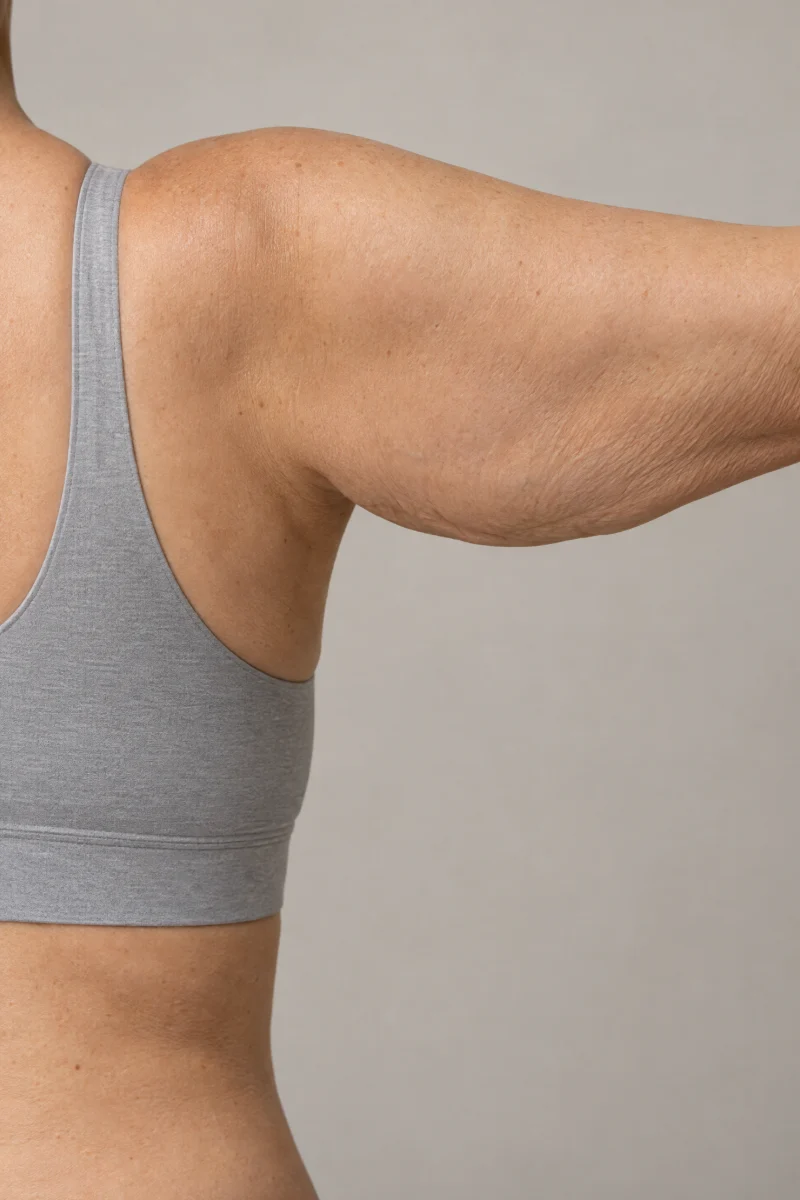

Gynaecomastia or Pseudogynaecomastia
Male Chest Enlargement — Assessment in Manchester
Men who are unhappy with their chest usually arrive having spent years assuming one of two things: either that it is their fault for being overweight, or that no amount of training will ever fix it. One of those is often right, and which one depends on what the tissue actually is.
Gynaecomastia is true enlargement of the glandular breast tissue behind the nipple. It is firm, rubbery, sits centrally under the areola and feels like a disc or button when you press on it. It does not respond to diet or exercise, because it is not fat.
Pseudogynaecomastia is fat, distributed across the chest without a glandular component. It is soft, diffuse, has no firm core, and it does respond to weight loss — sometimes completely.
Plenty of men have both. The proportions are what determine whether the answer is surgery, weight loss, or a combination — and it takes about thirty seconds to work out by examination. Anyone recommending an operation without doing that is guessing.
How the Two Are Told Apart
The pinch test, and what it tells you
Understanding Your Assessment
The examination is straightforward. Lying flat, your surgeon pinches the tissue between thumb and forefinger, working from the outside of the chest in towards the nipple.
Glandular tissue is felt as a distinct, firm, rubbery disc concentrated directly beneath the areola, with a definable edge. Press on it and it is noticeably denser than the tissue around it. It is often slightly tender, and it is frequently asymmetric between the two sides.
Fat is soft, even in consistency, and continues smoothly from the chest into the surrounding tissue with no firm core and no clear border.
You can get a rough sense of this yourself: lie on your back and feel behind the nipple. A firm disc you can define the edge of suggests glandular tissue. Uniform softness suggests fat. It is a guide rather than a diagnosis — and it is worth knowing before a consultation, because it tells you which conversation you should be having.
Where there is any doubt, or where the findings are unusual, ultrasound settles it.
Simon’s grading
Where true gynaecomastia is present, Simon’s classification describes how much there is and whether the skin has been stretched — which is what determines the operation.
Grade I. Small enlargement, no excess skin. Usually treated by removing the gland through a small incision at the edge of the areola, often with liposuction to blend the edges.
Grade IIa. Moderate enlargement, no excess skin. Same approach, more tissue removed.
Grade IIb. Moderate enlargement with skin excess. The skin will not retract fully on its own, so some skin tightening may be needed.
Grade III. Marked enlargement with significant skin excess, resembling a female breast. Needs formal skin excision and usually repositioning of the nipple, which means longer scars — a substantially bigger operation than Grade I.
The grade is also why quoted prices vary. A Grade I correction and a Grade III correction are not the same procedure.
When Gynaecomastia Needs Investigating First
Before anyone discusses an operation
Gynaecomastia has causes, and a proportion of them matter. Physiological gynaecomastia in adolescence is extremely common and resolves on its own in the large majority within two years — operating on a fifteen-year-old who would have been fine at seventeen is the wrong answer, and we will say so.
In adults, recognised causes include a number of prescribed medications, liver and kidney disease, thyroid disorders, low testosterone, and anabolic steroid use. Some are reversible: where a medication is responsible, changing it under the supervision of whoever prescribed it sometimes resolves the problem without surgery.
Features that need medical assessment before a surgical one: enlargement that has come on rapidly, tissue that is hard rather than rubbery, anything fixed to the skin or chest wall, nipple discharge or skin changes, or a markedly one-sided firm lump. Male breast cancer is rare but it exists, and it is excluded rather than assumed against. If any of that describes you, see your GP before booking a cosmetic consultation.
What Actually Treats Each One
Matching the answer to the finding
This is where the distinction pays off. Fat and gland respond to completely different things, and treating one as though it were the other is the commonest reason men are disappointed — whether they spent two years in the gym or paid for an operation they did not need.
1. Weight Loss — for pseudogynaecomastia
If the pinch test finds no glandular disc, the tissue is fat and it responds to a calorie deficit like fat anywhere else. Chest fat is often among the later areas to go, which is why men conclude it is not working — but it does. No operation is needed, it costs nothing, and we would rather tell you that than book you in. Come back if you reach a stable weight and a firm core is still there.
2. Gland Excision with Liposuction — from £6,500
The standard operation for true gynaecomastia, Grades I and IIa. The glandular disc is removed through a small incision at the lower edge of the areola, and liposuction blends the edges so there is no crater where the gland was. Day case, and the scar sits at the colour border of the areola where it becomes difficult to see.
3. Liposuction Alone — from £4,500
For pseudogynaecomastia in someone at a stable weight where the fat is localised to the chest and the skin quality is good. No gland to remove, so no excision needed. Worth being clear: liposuction will not remove glandular tissue, so if a firm disc is present this alone will leave it behind.
4. Gland Excision with Skin Reduction — Grade IIb and III
Where the skin has stretched and will not retract, removing the gland alone leaves a deflated, loose chest. Skin is excised and the nipple repositioned, which means longer scars and a bigger recovery. Quoted individually because the extent varies considerably. Common after major weight loss.
To find out whether your chest is glandular, fatty or both, book an assessment in Manchester on 0161 470 9280 or enquire online. If the answer is that weight loss will sort it, that is what you will be told.
Am I suitable for gynaecomastia surgery?
Timing and what is checked
Suitable candidates have confirmed glandular tissue, a stable weight held for six months or more, good general health, and realistic expectations about scars. The single most useful thing you can do before surgery is reach a stable weight, because operating during active weight loss means operating on a chest that is still changing.
We would ask you to wait if you are an adolescent within two years of onset, since most physiological gynaecomastia resolves; if you are still losing weight; if a medication that may be responsible has not yet been reviewed with your prescriber; or if anabolic steroid use is ongoing, because the tissue will recur.
Smokers are asked to stop for six weeks either side of surgery. The nipple has a modest blood supply and smoking raises the risk of losing it, which is a serious and permanent complication.
Stable Weight First
Six months at a steady weight. Operating on a chest that is still changing produces a result that changes with it — and for pseudogynaecomastia, weight loss may remove the need for surgery entirely.
Steroids Cause Recurrence
Anabolic steroid use causes gynaecomastia and it causes it again after surgery. There is no point operating while use continues, and we will ask directly rather than assume.
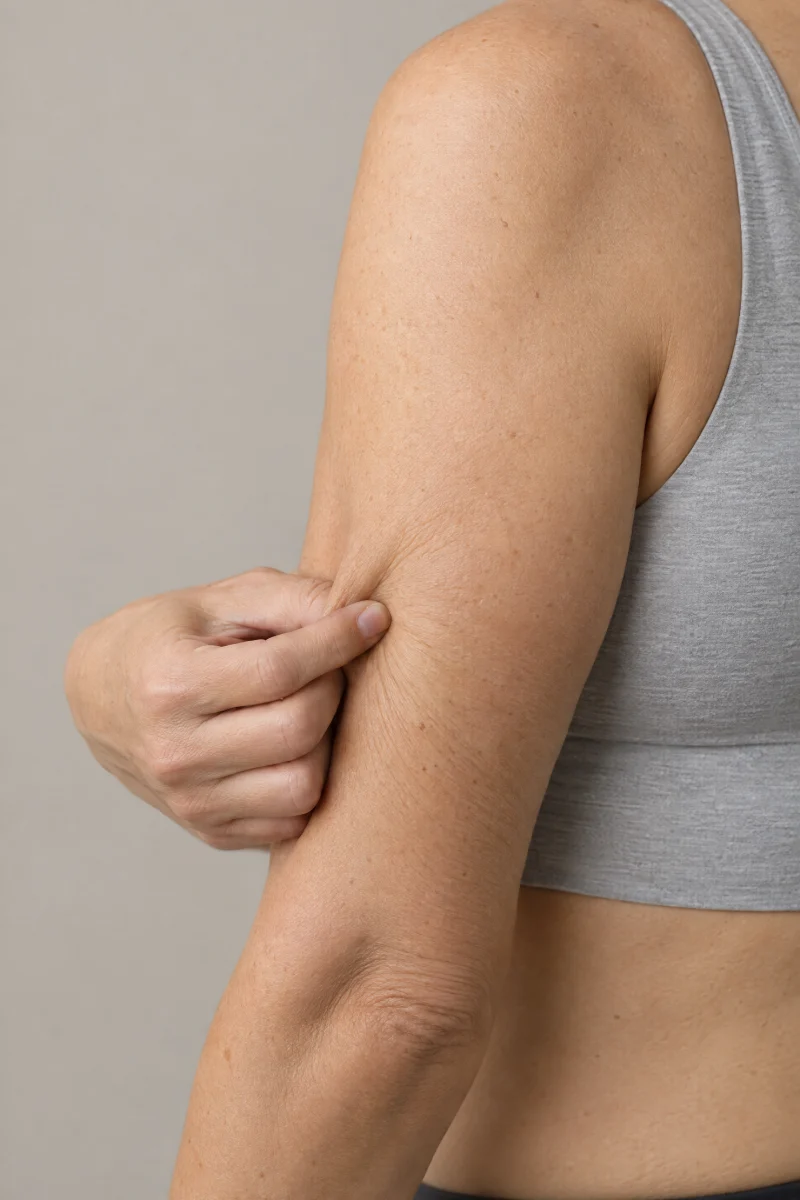
Puffy Nipples
The version that shows through a t-shirt
A common and specific complaint: the chest looks reasonable, but the nipple and areola protrude — noticeably through clothing, and more so when cold or after exercise. Men often describe this as the thing that stops them taking their top off, even at a perfectly normal body weight.
It is almost always a small amount of glandular tissue sitting directly under the areola, pushing it forward. It is a low-grade gynaecomastia rather than a separate condition, and because the volume is small it is among the more straightforward corrections — the disc is removed through a short incision at the areolar border, with liposuction to blend.
It is worth saying that this does not respond to training or weight loss, because there is no fat involved. Men who assume they simply need to be leaner often spend years getting leaner and finding the nipple still protrudes, because the cause was never fat.
What Treatment Costs
From £6,500
Gynaecomastia surgery — gland excision with liposuction, both sides — starts from £6,500 at Deansgate Hospital. Liposuction alone, for confirmed pseudogynaecomastia at a stable weight, starts from £4,500 for one area.
Grade IIb and Grade III corrections involving skin excision and nipple repositioning are quoted individually, because the extent varies considerably.
The fee covers your surgeon, your anaesthetist, the hospital, dressings and all routine follow-up. Compression garments are not included.
Assessment is a free consultation with a £25 booking deposit, redeemable against treatment. If the assessment concludes that what you have is fat rather than gland, you will be told that — and there is nothing further to pay and no operation to book.
Assessment and Surgery, Step by Step
From first appointment to twelve-month review
The assessment is short and it answers one question: gland, fat, or both. Where surgery is the right answer, here is what it involves.
You are examined standing and lying flat. Your surgeon pinches from the outer chest inwards towards the nipple, feeling for a firm glandular disc and defining its edge if there is one. The proportion of gland to fat is estimated, skin quality and elasticity assessed, and a Simon grade assigned to each side — asymmetry is common.
You will be asked about onset and duration, medications, recreational drug and anabolic steroid use, alcohol, and any relevant medical history. These questions are not judgement; they change the plan.
Where any feature is atypical — rapid onset, a hard or fixed lump, nipple discharge, one side only — imaging is arranged before anything cosmetic is discussed. Photographs are taken for your record, and you leave with a written plan and quotation.
For adolescents within two years of onset, the advice is almost always to wait, because most physiological gynaecomastia resolves on its own. That is a difficult thing to hear at sixteen and it is still the right advice.
For adults, where a prescribed medication is a recognised cause, we will suggest reviewing it with whoever prescribed it before considering surgery — a proportion resolve without an operation. Where blood tests are indicated, those are arranged. Where anabolic steroid use is ongoing, surgery is deferred, because the tissue recurs.
Most men come through this step with straightforward idiopathic gynaecomastia and proceed. For a minority it is the most useful part of the appointment, and for a very small number it identifies something that needed finding.
Under general anaesthetic, liposuction is performed first to address the fatty component and define the borders, then the glandular disc is excised through a short incision at the lower edge of the areola, where the scar sits at the colour border and becomes difficult to see.
Your surgeon will deliberately leave a thin layer of tissue directly beneath the nipple. Removing every last fragment produces a visible crater and a nipple that sticks to the chest wall — a recognised and avoidable complication of over-resection.
Where skin excision is needed (Grades IIb and III), that is done in the same operation and the nipple repositioned. Deansgate Hospital is a day-case facility, so you go home the same day once your surgeon and the recovery team are happy with you.
Week 1. Soreness and swelling, managed with simple painkillers. Compression garment day and night. No lifting above shoulder height, no driving. Bruising is common and tracks downwards.
Week 2. Reviewed in clinic. Most men with desk-based jobs return at the end of this week. Swelling still makes the chest look fuller than the result.
Weeks 3 to 6. Light walking only — nothing strenuous, nothing that raises your heart rate or blood pressure. Compression garment throughout; this is the thing that most affects how well the skin redrapes.
Six weeks onwards. Training resumes, including chest work. Swelling settles over three months and the final contour is judged at six — not before, and not at the two-week mark when most men start worrying.
Recognised risks: bleeding and haematoma, which is the commonest early complication and occasionally needs a return to theatre; infection; seroma; altered or reduced nipple sensation, usually temporary; and asymmetry between the two sides, which is common because the two sides rarely start equal.
Over-resection is the characteristic aesthetic complication — taking too much tissue from behind the nipple leaves a visible depression and a tethered, adherent nipple, which is difficult to correct afterwards. Leaving a deliberate layer is what prevents it.
Also: contour irregularity from the liposuction component, loose skin where the envelope does not retract as hoped, permanent scarring at the areolar border, and in Grade III corrections the longer scars that come with skin excision. Nipple loss is rare and strongly associated with smoking.
Recurrence is possible where the underlying cause continues — ongoing anabolic steroid use above all.
Deansgate Hospital is a registered independent hospital in central Manchester with its own theatres and its own team. Your consultant plastic surgeon is on the GMC specialist register, you meet them at assessment, and they perform the operation themselves.
What matters most for this condition is being told the truth about what your chest is made of. A meaningful proportion of the men who come to us for gynaecomastia surgery have pseudogynaecomastia and need weight loss, not an operation — and we will say so rather than take the booking. Aftercare, follow-up and any revision required for a surgical complication are included in the quoted fee.
Gynaecomastia or Pseudogynaecomastia
Frequently Asked Questions
What is the difference between gynaecomastia and pseudogynaecomastia?
Gynaecomastia is true enlargement of the glandular breast tissue behind the nipple — firm, rubbery, sitting centrally under the areola with a definable edge. Pseudogynaecomastia is fat spread across the chest with no glandular component — soft, diffuse, no firm core. The first does not respond to diet or exercise; the second does. Many men have both, and the proportions decide the treatment.
How can I tell which one I have?
Lie on your back and feel behind the nipple. A firm disc whose edge you can define suggests glandular tissue. Uniform softness continuing smoothly into the surrounding chest suggests fat. It is a guide, not a diagnosis — a proper pinch test takes about thirty seconds at consultation, and ultrasound settles any doubt.
Will losing weight get rid of it?
If it is pseudogynaecomastia, yes — it is fat and it responds to a calorie deficit like fat anywhere else. Chest fat is often among the later areas to go, which is why men conclude it is not working. If there is a firm glandular disc behind the nipple, no amount of weight loss will remove it, because it is not fat.
Will exercise fix it?
Building the pectoral muscle underneath can make glandular tissue more obvious rather than less, by pushing it forward. Exercise helps with the fatty component as part of overall weight loss, but it does not remove gland. Men who train hard for years and find the chest unchanged usually have a glandular component nobody has examined for.
What are Simon’s grades?
Grade I: small enlargement, no excess skin. Grade IIa: moderate enlargement, no excess skin. Grade IIb: moderate enlargement with skin excess. Grade III: marked enlargement with significant skin excess resembling a female breast. The grade determines whether skin needs removing and the nipple repositioning — which is why a Grade I and a Grade III correction are different operations at different prices.
What causes gynaecomastia?
In adolescence it is usually physiological and resolves on its own in most cases within two years. In adults, recognised causes include a number of prescribed medications, liver and kidney disease, thyroid disorders, low testosterone, and anabolic steroid use. A proportion is idiopathic — no cause found. Where a medication is responsible, reviewing it with your prescriber sometimes resolves it without surgery.
When should I see a doctor rather than a surgeon?
If the enlargement came on rapidly, if the tissue feels hard rather than rubbery, if it is fixed to the skin or chest wall, if there is nipple discharge or skin change, or if it is a markedly one-sided firm lump. Male breast cancer is rare but it exists and is excluded rather than assumed against. See your GP before booking a cosmetic consultation.
My teenage son has it — should he have surgery?
Almost certainly not yet. Physiological gynaecomastia in adolescence is very common and resolves on its own in the large majority within about two years. Operating on a fifteen-year-old who would have been fine at seventeen is the wrong answer. If it persists beyond two years, or is severe enough to cause real distress, it is worth assessing — but waiting is usually the right advice.
What are puffy nipples?
A small amount of glandular tissue directly under the areola pushing it forward, so the nipple protrudes noticeably through clothing. It is low-grade gynaecomastia rather than a separate condition, and because the volume is small it is one of the more straightforward corrections. It does not respond to training or weight loss, because no fat is involved.
Will it come back after surgery?
The gland that is removed does not grow back. But if the underlying cause continues, new tissue can develop — ongoing anabolic steroid use being the clearest example, which is why we defer surgery while use continues. Significant weight gain will also add fat back to the chest.
Where are the scars?
For Grades I and IIa, a short incision at the lower edge of the areola where the colour changes, which is one of the better places on the body to hide a scar, plus small liposuction access points. Grades IIb and III need skin excision and nipple repositioning, which means longer and more visible scars — a genuine trade-off discussed properly before you commit.
How much does gynaecomastia surgery cost in Manchester?
Gland excision with liposuction, both sides, starts from £6,500 at Deansgate Hospital. Liposuction alone for confirmed pseudogynaecomastia starts from £4,500 for one area. Grade IIb and III corrections with skin excision are quoted individually. The fee covers your surgeon, anaesthetist, the hospital, dressings and routine follow-up; compression garments are not included.
Not sure whether it is gland or fat?
Male Chest Assessment, Manchester
A meaningful proportion of the men who come to us for gynaecomastia surgery have pseudogynaecomastia and need weight loss rather than an operation. It takes about thirty seconds of examination to tell which you are, and knowing changes what you should spend the next year doing.
Book an assessment with one of our consultant plastic surgeons in Manchester. Your chest will be examined properly, graded on each side, and you will be told plainly whether what you have is gland, fat or both. If the answer is that weight loss will sort it, that is what you will hear. Call 0161 470 9280 or enquire online.